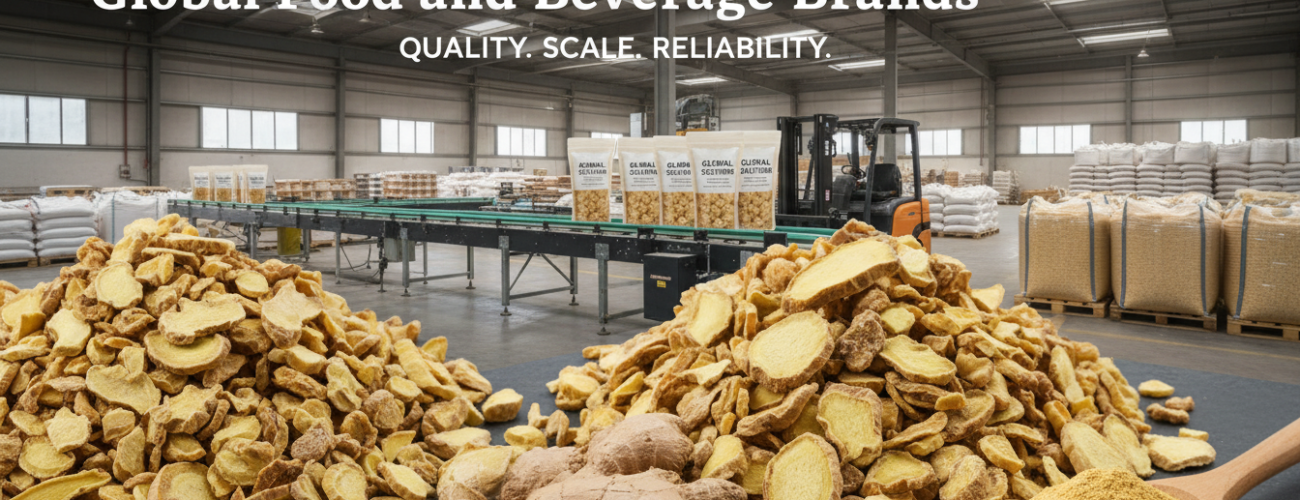
Bulk Dried Ginger Solutions for Global Food and Beverage Brands: Beyond Flavor, Delivering Functionality and Sustainability
Ginger, with its pungent aroma and complex, warming flavor profile, has transcended its traditional role as a culinary spice and emerged as a powerful functional ingredient in the global food and beverage landscape. From invigorating ginger ales and spicy curries to soothing teas and wellness shots, the demand for ginger-infused products is experiencing exponential growth, driven by increasing consumer awareness of its potential health benefits and its versatility in flavor applications. For global food and beverage brands seeking to capitalize on this trend, sourcing high-quality bulk dried ginger becomes paramount. However, the world of bulk dried ginger solutions is nuanced, encompassing various forms, origins, and processing methods, each with its unique impact on flavor, functionality, and sustainability. This article delves into the multifaceted world of bulk dried ginger solutions, exploring the options available to global food and beverage brands and providing insights into selecting the optimal solution to meet their specific needs and ensure both quality and ethical sourcing.
Understanding the Spectrum of Dried Ginger Forms:
The term "dried ginger" is an umbrella term encompassing various processed forms, each catering to different applications and flavor profiles. Understanding these distinctions is crucial for brands seeking to create consistent and appealing products.
-
Dried Whole Ginger: This refers to the whole ginger rhizome (underground stem) that has been dried without further processing. While offering the most "natural" form, it requires significant processing on the manufacturer’s end – grinding, milling, or extraction – making it less convenient for large-scale production. Its primary use is often in slow-cooked dishes where the flavor gradually infuses over time. The resulting flavor is a robust, slightly earthy ginger profile.
-
Dried Ginger Slices (Chips): Ginger slices are thinly cut sections of the rhizome that are then dried. They offer a more convenient option than whole ginger, requiring less initial preparation. These are commonly used in tea blends, infusions, and as decorative elements in certain dishes. The flavor profile is milder compared to ground ginger, offering a subtle warmth and sweetness.
-
Dried Ginger Powder (Ground Ginger): This is the most widely used form in the food and beverage industry. It is produced by grinding dried ginger slices or whole ginger into a fine powder. The particle size, grinding process, and the quality of the initial ginger rhizome significantly impact the flavor, aroma, and color of the final product. Dried ginger powder provides a concentrated flavor punch, making it ideal for baking, seasoning mixes, spice blends, and beverage applications. It offers consistent flavor delivery and easy incorporation into various formulations.
-
Granulated Ginger: A coarser version of ginger powder, granulated ginger offers a slightly different texture and slower flavor release compared to its finer counterpart. It is often used in applications where a visible ginger presence is desired, such as in certain types of baked goods or confectionery items.
-
Ginger Flakes: A less common form, ginger flakes are produced by crushing dried ginger slices or chunks. They offer a textural element in addition to the ginger flavor and are often used in culinary applications where a visual and textural impact is desired.
-
CO2 Extracted Ginger Oleoresin: While not technically "dried ginger," CO2 extracted ginger oleoresin is a highly concentrated extract derived from dried ginger. It captures the volatile oils and pungent compounds responsible for ginger’s characteristic flavor and aroma. It is used in small quantities to impart a potent ginger flavor to beverages, seasonings, and sauces, offering a cost-effective solution for achieving a consistent and intense ginger flavor profile.
- Ginger Essential Oil: Similar to oleoresin, ginger essential oil is extracted from dried ginger through steam distillation or other extraction methods. It primarily captures the volatile aromatic compounds and is used for flavoring, fragrance, and aromatherapy applications.
The Terroir of Ginger: Origin and its Impact on Flavor & Quality:
The origin of the ginger rhizome plays a significant role in determining its flavor profile, pungency, and overall quality. Factors such as soil composition, climate, and cultivation practices influence the chemical composition of the ginger, leading to distinct regional variations.
-
Chinese Ginger: Known for its high gingerol content (the primary compound responsible for ginger’s pungency), Chinese ginger is often characterized by a bold, spicy flavor and a yellowish hue. It is a readily available and cost-effective option, making it a popular choice for large-scale food and beverage production.
-
Indian Ginger (Cochin Ginger): Indian ginger, particularly the variety grown in the Cochin region, is highly prized for its aromatic complexity and slightly milder pungency compared to Chinese ginger. It has a citrusy, floral aroma and a balanced flavor profile, making it a favored choice for premium applications.
-
Nigerian Ginger: Nigerian ginger is known for its robust, earthy flavor and slightly higher fiber content. It is often used in savory dishes and spice blends.
-
Peruvian Ginger: Peruvian ginger is gaining popularity for its organic cultivation practices and its distinct flavor profile, which is characterized by a subtle sweetness and a delicate spice.
- Australian Ginger: Australian ginger is known for its freshness and vibrant flavor, often commanding a premium price due to its shorter transportation distances to certain markets and its adherence to stringent quality standards.
When selecting a bulk dried ginger supplier, it is crucial to understand the origin of the ginger and its characteristic flavor profile to ensure it aligns with the desired sensory attributes of the final product. Transparency and traceability are key indicators of a reliable supplier who can provide detailed information about the ginger’s origin and cultivation practices.
Processing and Quality Control: Ensuring Safety and Consistency:
The processing methods used to produce dried ginger significantly impact its quality, safety, and shelf life. Reputable suppliers employ rigorous quality control measures at every stage of the process, from sourcing raw materials to packaging the final product.
-
Cleaning and Washing: Thorough cleaning and washing of the ginger rhizomes are essential to remove soil, debris, and contaminants. This step is crucial for ensuring the safety and purity of the final product.
-
Slicing and Drying: The slicing process must be carefully controlled to ensure uniform thickness, which promotes consistent drying. Drying methods vary, including sun-drying, air-drying, and mechanical drying. Mechanical drying, using controlled temperature and humidity, is generally preferred for large-scale production as it offers greater control over the drying process and reduces the risk of contamination.
-
Grinding and Milling: For dried ginger powder, the grinding and milling process must be optimized to achieve the desired particle size and consistency. This process also affects the flavor release and dispersibility of the powder in various applications.
-
Quality Control Testing: Reputable suppliers conduct rigorous quality control testing to ensure the product meets specified standards for moisture content, volatile oil content, gingerol content, microbial counts, heavy metals, and pesticide residues. Certificates of Analysis (COAs) should be readily available and should provide detailed information about the product’s quality parameters.
- Packaging and Storage: Proper packaging and storage are crucial for maintaining the quality and extending the shelf life of dried ginger. Packaging materials should be moisture-proof, airtight, and protect the product from light and oxygen. Storage conditions should be cool, dry, and well-ventilated.
Sustainability and Ethical Sourcing: Meeting Consumer Expectations:
In today’s environmentally conscious market, global food and beverage brands are increasingly focused on sustainability and ethical sourcing. Consumers are demanding transparency and accountability throughout the supply chain, and they are willing to pay a premium for products that are produced in a responsible and sustainable manner.
-
Sustainable Farming Practices: Supporting sustainable farming practices is crucial for ensuring the long-term viability of the ginger industry. This includes promoting soil health, reducing water usage, minimizing pesticide and fertilizer use, and implementing integrated pest management strategies.
-
Fair Labor Practices: Ensuring fair labor practices is essential for protecting the rights and well-being of farmers and workers involved in the ginger supply chain. This includes providing fair wages, safe working conditions, and access to education and healthcare.
-
Traceability and Transparency: Traceability and transparency are key elements of a sustainable and ethical supply chain. Brands should be able to trace the ginger back to its origin and verify that it was produced in accordance with sustainable and ethical standards. This can be achieved through certifications such as Fairtrade, Organic, and Rainforest Alliance.
- Reducing Environmental Impact: Minimizing the environmental impact of ginger production is crucial for protecting the planet. This includes reducing carbon emissions from transportation, minimizing waste, and promoting energy efficiency.
Formulating with Dried Ginger: Considerations for Flavor and Functionality:
Successfully incorporating dried ginger into food and beverage formulations requires careful consideration of its flavor profile, functionality, and interaction with other ingredients.
-
Flavor Intensity: Dried ginger powder provides a concentrated flavor punch, so it is important to use it sparingly, especially in delicate applications. Start with small amounts and gradually increase the dosage until the desired flavor intensity is achieved.
-
Flavor Pairing: Ginger pairs well with a wide range of flavors, including sweet, savory, spicy, and citrusy notes. Experiment with different flavor combinations to create unique and appealing products.
-
Solubility and Dispersibility: The solubility and dispersibility of dried ginger powder can affect its performance in various applications. Finely ground powders generally disperse more readily in liquids and offer a smoother mouthfeel.
-
Enzymatic Activity: Ginger contains enzymes that can affect the texture and stability of certain products. In some cases, it may be necessary to heat-treat the ginger or use enzyme inhibitors to prevent unwanted enzymatic activity.
- Bioavailability: The bioavailability of ginger’s active compounds can be affected by various factors, including processing methods, formulation, and individual metabolism. Consider using extraction methods or encapsulation techniques to enhance bioavailability and maximize the potential health benefits of ginger.
By carefully considering these factors, global food and beverage brands can effectively leverage the flavor and functionality of bulk dried ginger to create innovative and appealing products that meet consumer demand for both taste and wellness. Partnering with a reputable and knowledgeable supplier who can provide technical support and guidance throughout the formulation process is crucial for success.








Comments are closed