
Standardized Refining Processes for Global Shea Butter Export: Navigating Quality, Sustainability, and Market Demands
Shea butter, a fat extracted from the nuts of the shea tree (Vitellaria paradoxa), is a prized natural ingredient globally renowned for its emollient, moisturizing, and healing properties. From cosmetics and personal care products to food applications, shea butter’s versatility and naturally rich composition have fueled its growing international demand. However, to compete effectively in the global market, shea butter producers must adhere to stringent quality standards, prioritize sustainable practices, and understand the varying needs of different application sectors. This necessitates the implementation of standardized refining processes that ensure consistent quality, safety, and compliance with international regulations. This article delves into the critical aspects of standardized refining for shea butter destined for global export, exploring the nuances of each process stage, highlighting best practices, and examining the challenges and opportunities that lie ahead.
Understanding the Landscape of Global Shea Butter Markets:
Before delving into the intricacies of refining, it’s crucial to understand the diverse demands of the global shea butter market. The primary markets can be broadly categorized into:
- Cosmetics and Personal Care: This is the largest consumer of shea butter, utilizing it in lotions, creams, soaps, lip balms, and hair care products. Quality parameters are stringent, with a focus on color, odor, FFA (Free Fatty Acid) content, and the absence of contaminants. Ethical sourcing and sustainability are increasingly important considerations.
- Food Industry: Shea butter is used in confectionery, particularly in chocolate production as a cocoa butter equivalent (CBE), and in spreads and bakery products. Food-grade shea butter requires stringent adherence to food safety regulations, including contaminant levels, and undergoes specific refining processes to remove undesirable flavors and odors.
- Pharmaceuticals: Shea butter is utilized in some topical pharmaceutical preparations due to its emollient and anti-inflammatory properties. This application demands the highest purity and adherence to pharmaceutical-grade standards.
- Industrial Applications: While less common, shea butter finds limited use in industrial applications such as lubricant production. Quality requirements are less demanding than in other sectors.
Each of these markets has specific quality expectations and regulatory requirements. Understanding these demands is the first step in establishing appropriate and standardized refining processes.
The Importance of Standardization in Shea Butter Refining:
Standardization in shea butter refining is critical for several reasons:
- Consistent Quality: Standardized processes ensure consistent product quality, meeting the specific requirements of different markets and applications. This consistency builds trust with buyers and promotes long-term business relationships.
- Regulatory Compliance: Different countries and regions have varying regulations regarding food safety, cosmetic ingredients, and environmental standards. Standardized processes ensure compliance with these regulations, preventing costly rejections and legal issues.
- Efficiency and Cost-Effectiveness: Standardized processes optimize resource utilization, reduce waste, and improve production efficiency, ultimately lowering production costs.
- Traceability and Transparency: Standardized processes facilitate traceability throughout the supply chain, allowing for identification of potential issues and ensuring transparency regarding sourcing and production practices.
- Market Access: Meeting international quality standards is often a prerequisite for accessing global markets. Standardized refining processes enhance competitiveness and expand market opportunities.
- Sustainable Practices: Standardization can incorporate sustainable practices, such as efficient energy use, waste management, and ethical sourcing, enhancing the overall sustainability of the shea butter industry.
Key Stages in Standardized Shea Butter Refining:
The refining of shea butter typically involves several key stages, each of which can be standardized to ensure optimal quality and consistency.
-
Cleaning and Preparation:
- Sorting and Cleaning: Raw shea nuts often contain impurities such as dirt, stones, and other debris. A thorough cleaning process involving sorting, sieving, and washing is essential to remove these contaminants. Standardized procedures should define the acceptable level of impurities and the frequency of cleaning.
- Drying: Proper drying of the cleaned nuts is crucial to prevent mold growth and maintain the quality of the extracted butter. Standardized drying methods, such as sun-drying or using mechanical dryers, should be employed to achieve a consistent moisture content, typically around 7-8%.
- Crushing and Grinding: The dried nuts are then crushed and ground to facilitate efficient extraction of the butter. Standardized particle size distribution is important for optimizing extraction yields.
-
Extraction:
- Mechanical Extraction (Pressing): This involves using mechanical presses to squeeze the butter out of the ground shea nuts. Two common methods are hydraulic pressing and expeller pressing. Standardization includes controlling the pressure, temperature, and pressing time to maximize yield and minimize damage to the butter. Cold-pressing, where temperatures are kept low, is often preferred for retaining the butter’s natural properties.
- Solvent Extraction: This method uses solvents, typically hexane, to extract the butter from the ground nuts. Solvent extraction offers higher yields compared to mechanical pressing but requires careful removal of the solvent to ensure consumer safety. Standardized procedures must meticulously control the solvent-to-nut ratio, extraction time, temperature, and solvent recovery processes to minimize solvent residue and ensure compliance with regulatory limits. The choice of solvent extraction needs careful consideration, considering environmental impact and potential for residual contamination.
-
Refining (Neutralization, Bleaching, Deodorization):
- Neutralization (Deacidification): This process removes free fatty acids (FFAs), which contribute to rancidity and undesirable flavors. The most common method is chemical neutralization using alkali, such as sodium hydroxide. Standardized procedures define the concentration of alkali, reaction time, temperature, and mixing intensity to ensure efficient FFA removal while minimizing saponification (soap formation). Alternative methods, such as physical refining (steam distillation), are gaining popularity due to their environmentally friendly nature and ability to minimize chemical usage.
- Bleaching (Color Removal): Bleaching removes pigments and other color-causing compounds, resulting in a lighter-colored butter. Activated carbon, clay, or other adsorbents are typically used. Standardization involves controlling the type and amount of bleaching agent, temperature, and contact time to achieve the desired color without affecting the butter’s nutritional or sensory properties. Over-bleaching can strip away beneficial compounds, so careful optimization is essential.
- Deodorization (Odor Removal): This process removes volatile compounds that contribute to undesirable odors. Steam distillation under vacuum is the most common method. Standardized procedures define the temperature, pressure, steam flow rate, and residence time to effectively remove odors while minimizing the loss of desirable volatile components. This stage is particularly critical for food-grade shea butter.
-
Fractionation (Optional):
- Fractionation is a process that separates shea butter into different fractions based on their melting points. This allows for tailoring the butter’s properties for specific applications. For example, a harder fraction can be used in confectionery, while a softer fraction can be used in cosmetics. Standardized cooling rates, filtration methods, and temperature control are crucial for achieving consistent fractionation results. This process can be useful for producing shea butter with specific fatty acid profiles.
-
Quality Control and Packaging:
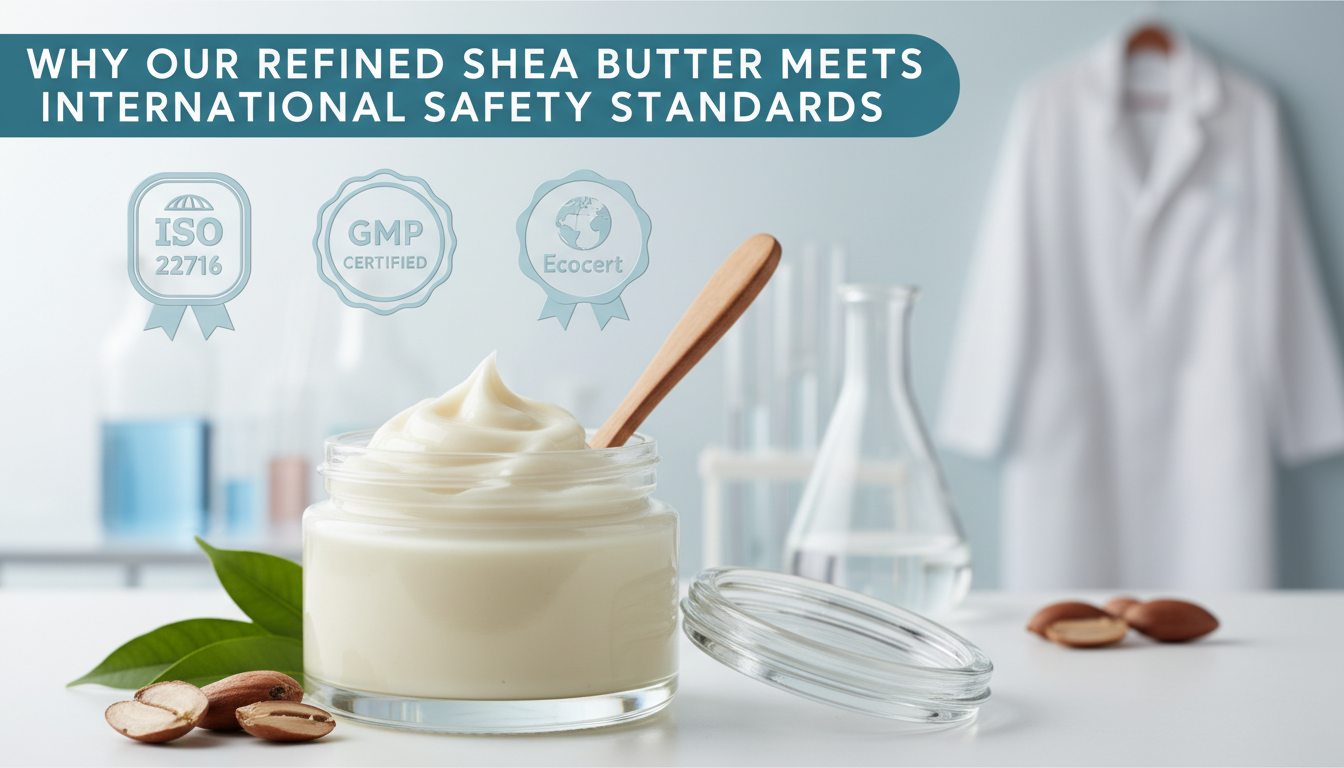
- Quality Testing: Rigorous quality testing is essential at each stage of the refining process to ensure that the final product meets the required specifications. This includes testing for FFA content, color, odor, moisture content, peroxide value (a measure of oxidation), heavy metals, and pesticide residues. Standardized testing methods, such as those specified by international standards organizations (e.g., ISO, ASTM), should be used.
- Packaging: Proper packaging is crucial to protect the refined shea butter from contamination, oxidation, and moisture absorption during storage and transportation. Standardized packaging materials and methods should be used to ensure product integrity and shelf life. Packaging should also consider ease of handling and transportation.
Challenges and Opportunities in Standardizing Shea Butter Refining:
Despite the benefits of standardization, several challenges exist in its implementation:
- Variability in Raw Materials: The quality of raw shea nuts can vary significantly depending on factors such as geographical origin, tree variety, and harvesting practices. This variability can make it challenging to achieve consistent results with standardized refining processes.
- Lack of Infrastructure and Technology: Many shea butter producing regions lack the necessary infrastructure and technology for implementing sophisticated refining processes.
- Cost Constraints: Implementing standardized refining processes can require significant investment in equipment and training, which may be a barrier for small-scale producers.
- Enforcement of Standards: Effective enforcement of quality standards is crucial to prevent the sale of substandard shea butter.
- Maintaining Authenticity: As demand grows, there’s a risk of adulteration with other vegetable oils. Robust testing and traceability are key to maintaining shea butter’s authenticity.
However, these challenges also present opportunities:
- Investment in Research and Development: Further research is needed to develop more efficient and sustainable refining processes that are tailored to the specific characteristics of shea nuts from different regions.
- Technology Transfer and Capacity Building: Providing training and technical assistance to shea butter producers in developing countries can help them adopt standardized refining processes and improve product quality.
- Development of Affordable Technologies: Developing affordable and appropriate technologies for small-scale producers can make standardized refining more accessible.
- Strengthening Regulatory Frameworks: Strengthening regulatory frameworks and enforcement mechanisms can help ensure compliance with quality standards and protect consumers.
- Promoting Sustainable Sourcing: Emphasizing sustainable sourcing practices, including fair trade and environmental protection, can enhance the market value of shea butter and contribute to the long-term sustainability of the industry.
- Developing Traceability Systems: Implementing robust traceability systems, utilizing technologies like blockchain, can enhance transparency and build consumer trust.
- Collaboration and Partnerships: Collaboration among producers, processors, researchers, and regulatory agencies is essential for promoting standardization and sustainable development of the shea butter industry.
Standardizing shea butter refining processes is a complex but essential undertaking for ensuring consistent quality, meeting regulatory requirements, and accessing global markets. By understanding the nuances of each process stage, adopting best practices, and addressing the challenges and opportunities that lie ahead, the shea butter industry can unlock its full potential and contribute to the economic development of shea-producing regions while providing consumers with a safe, high-quality, and sustainable product. The ongoing evolution of consumer preferences towards natural and ethically sourced ingredients provides a significant tailwind for the shea butter industry, provided that the industry embraces standardization and sustainable practices.





Comments are closed