
The Rising Export Potential of Nigerian Soybeans: A Golden Opportunity Unfolding
Nigeria, a nation often associated with its oil wealth, possesses a vast and largely untapped potential in its agricultural sector. Amongst the numerous crops capable of driving economic diversification, soybeans stand out as a particularly promising export commodity. While currently consumed primarily domestically, a confluence of factors is positioning Nigerian soybeans for significant growth in the international market. This article delves into the reasons behind this rising export potential, the challenges that need to be addressed, and the opportunities that await if Nigeria can effectively leverage its soybean resources.
The Growing Global Demand for Soybeans:
The global demand for soybeans is experiencing consistent growth, fueled by several key trends. Firstly, the expanding middle class in emerging economies, particularly in Asia, is driving increased consumption of meat and dairy products. Soybeans are a critical component of animal feed, and as demand for livestock increases, so too does the demand for soybeans to sustain it. Secondly, the growing popularity of plant-based diets and soy-based products, like tofu, soy milk, and tempeh, is further contributing to the rising demand, particularly in developed countries. Finally, soybeans are also used in the production of biofuels, further diversifying their market and contributing to sustained demand growth.
This global landscape presents a significant opportunity for Nigeria. The country possesses suitable climatic conditions and vast arable land that can be utilized for soybean cultivation. Compared to other major soybean producers like the United States, Brazil, and Argentina, Nigeria benefits from lower labor costs, potentially making its soybeans more competitive in the global market. Capitalizing on this advantage requires strategic planning, investment in infrastructure, and adherence to international quality standards.
Nigeria’s Existing Soybean Production and Domestic Consumption:
While Nigeria’s soybean production is primarily geared towards domestic consumption, the current levels are substantial and provide a solid foundation for export expansion. Soybeans are predominantly grown in the Northern and Central regions of Nigeria, with major producing states including Benue, Kaduna, Niger, and Plateau. The crop is cultivated by both smallholder farmers and larger-scale commercial farms.
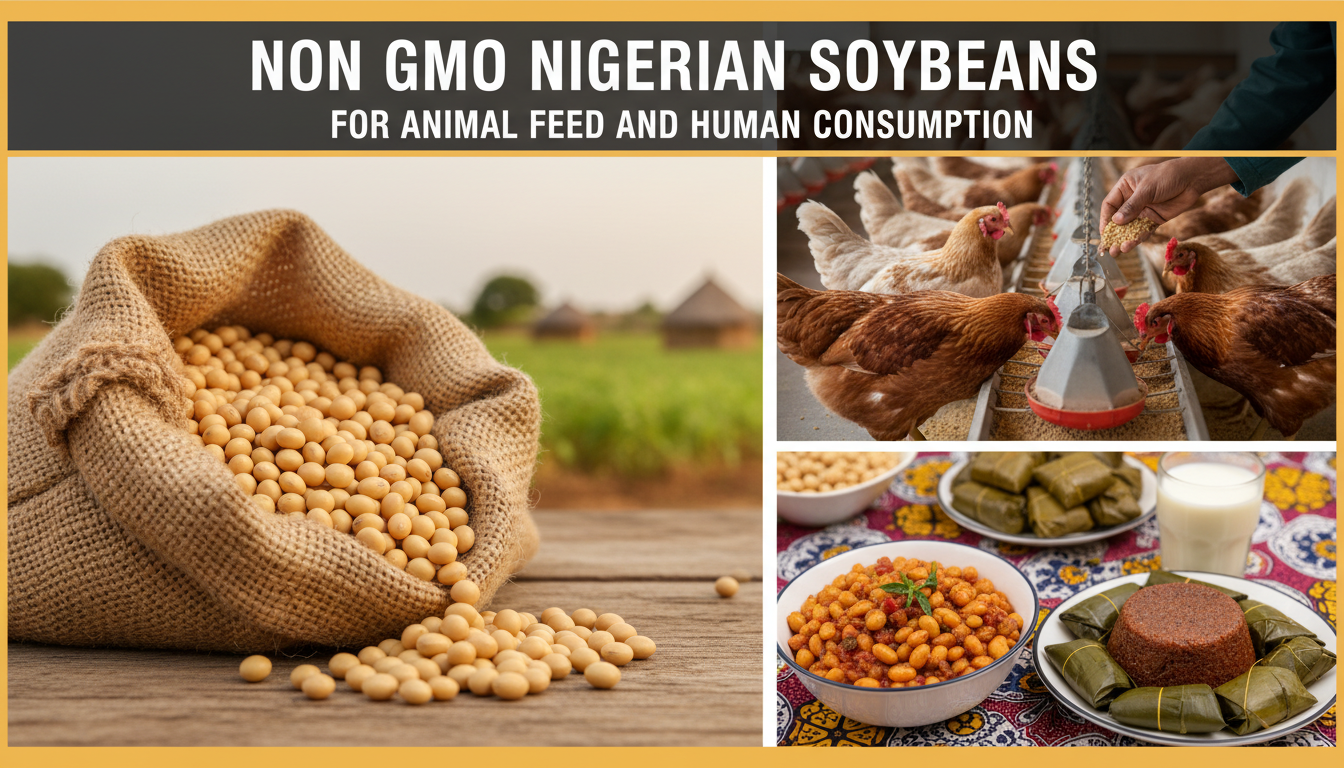
Domestically, soybeans play a vital role in human nutrition and animal feed production. They are a key ingredient in local foods like akara (bean cakes), moi-moi (steamed bean pudding), and soy-ogi (fermented soybean porridge). Furthermore, soybeans are increasingly utilized in the production of poultry feed, livestock feed, and fish feed, supporting the growth of the animal husbandry sector.
However, domestic demand often outstrips supply, leading to price fluctuations and sometimes necessitating imports to bridge the gap. This highlights the urgent need to increase soybean production to meet both domestic and export demands. Improving yields through the adoption of better farming practices, access to quality seeds, and effective pest and disease management are crucial steps to enhance production capacity.
Factors Driving the Export Potential of Nigerian Soybeans:
Several key factors are converging to enhance the export potential of Nigerian soybeans:
- Government Support and Policy Initiatives: The Nigerian government has recognized the importance of agriculture in diversifying the economy and reducing dependence on oil. Various initiatives aimed at supporting soybean production and export are underway, including:
- Agricultural Transformation Agenda (ATA): While initially focused on other crops, the principles of ATA emphasizing value chain development, access to finance, and improved infrastructure are applicable to the soybean sector.
- Anchor Borrowers’ Programme (ABP): This program provides farmers with access to credit and agricultural inputs to boost production. Although facing challenges, it has the potential to significantly increase soybean yields if implemented effectively.
- Export Expansion Grant (EEG): This incentive provides financial support to exporters to encourage non-oil exports, including soybeans.
- Tax incentives and subsidies: The government can offer tax breaks and subsidies to encourage investment in soybean processing and export infrastructure.
- Increased Investment in Processing Capacity: The development of soybean processing facilities within Nigeria is crucial for adding value to the crop and increasing its export competitiveness. Processing soybeans into products like soybean oil, soybean meal, and soy protein isolates not only increases the value of the export but also creates employment opportunities within the country. The presence of processing plants also encourages farmers to increase their production, knowing there is a ready market for their harvest.
- Growing Awareness of Improved Farming Practices: Organizations like the International Institute of Tropical Agriculture (IITA) and the National Agricultural Extension and Research Liaison Services (NAERLS) are actively promoting the adoption of improved farming practices among Nigerian soybean farmers. These practices include:
- Use of improved soybean varieties: High-yielding, disease-resistant soybean varieties are essential for maximizing production.
- Proper soil management: Soil testing, fertilizer application, and conservation tillage practices are crucial for maintaining soil fertility and improving yields.
- Integrated pest and disease management: Effective control of pests and diseases is essential for preventing crop losses.
- Optimal planting dates and spacing: Planting at the right time and with the appropriate spacing can significantly increase yields.
- Strategic Location and Trade Agreements: Nigeria’s geographic location in West Africa gives it a strategic advantage for exporting soybeans to neighboring countries and other regions. The country is also a member of the Economic Community of West African States (ECOWAS), which provides preferential trade agreements with other member states. This allows for easier and more cost-effective trade of soybeans within the region. Furthermore, Nigeria is exploring trade agreements with other countries and regions, such as the African Continental Free Trade Area (AfCFTA), which could further expand its export opportunities.
- Private Sector Investment: Private sector involvement is essential for driving the growth of the Nigerian soybean industry. Investments in soybean production, processing, storage, transportation, and marketing are needed to create a robust and competitive export sector. This requires attracting both domestic and foreign investment through favorable policies and a conducive business environment. Private sector companies can also play a vital role in providing farmers with access to finance, inputs, and training.
Challenges Hindering the Full Realization of Soybean Export Potential:
Despite the promising outlook, several challenges need to be addressed to unlock the full export potential of Nigerian soybeans:
- Low Yields: Nigerian soybean yields are significantly lower than those in other major producing countries. This is due to a combination of factors, including the use of low-yielding varieties, poor soil fertility, inadequate pest and disease management, and lack of access to irrigation.
- Inadequate Infrastructure: Poor infrastructure, including roads, railways, and storage facilities, hampers the efficient transportation of soybeans from farms to processing plants and export terminals. This increases transportation costs and reduces the competitiveness of Nigerian soybeans in the global market. The lack of adequate storage facilities also leads to post-harvest losses, further reducing the quantity of soybeans available for export.
- Limited Access to Finance: Farmers often lack access to affordable credit, which limits their ability to invest in improved farming practices, purchase quality inputs, and expand their operations. This is particularly true for smallholder farmers, who constitute the majority of soybean producers in Nigeria.
- Lack of Quality Control and Standardization: The absence of robust quality control and standardization systems can affect the quality of Nigerian soybeans and reduce their appeal to international buyers. This includes issues such as aflatoxin contamination, moisture content, and foreign matter.
- Inefficient Processing and Marketing Systems: Inefficient processing and marketing systems can increase costs and reduce the profitability of soybean production. This includes issues such as outdated processing equipment, lack of market information, and inadequate marketing infrastructure.
- Aflatoxin Contamination: Aflatoxins are toxic substances produced by certain fungi that can contaminate crops, including soybeans. Aflatoxin contamination is a major concern for Nigerian soybeans, as it can make them unsuitable for human and animal consumption and restrict their access to international markets. Addressing this requires implementing effective pre- and post-harvest management practices to prevent aflatoxin contamination. This includes proper drying, storage, and handling of soybeans.
- Security Challenges: Insecurity in some parts of the country, particularly in the North, disrupts agricultural activities and discourages investment in soybean production. This includes issues such as banditry, kidnapping, and farmer-herder conflicts.
- Climate Change Impacts: Climate change poses a significant threat to soybean production in Nigeria. Changes in rainfall patterns, increased temperatures, and more frequent droughts can reduce yields and increase the risk of crop failures. Adapting to climate change requires implementing climate-smart agricultural practices, such as drought-resistant varieties, water conservation techniques, and crop diversification.
Opportunities for Growth and Development:
Despite these challenges, there are significant opportunities for growth and development in the Nigerian soybean industry. Capitalizing on these opportunities requires a concerted effort from the government, the private sector, and farmers:
- Investing in Research and Development: Increased investment in research and development is needed to develop high-yielding, disease-resistant soybean varieties that are adapted to the Nigerian environment. This also includes research into improved farming practices, pest and disease management techniques, and post-harvest handling methods.
- Improving Infrastructure: The government needs to prioritize investments in infrastructure, including roads, railways, storage facilities, and irrigation systems. This will reduce transportation costs, minimize post-harvest losses, and improve the overall efficiency of the soybean value chain.
- Providing Access to Finance: The government and financial institutions need to provide farmers with access to affordable credit, enabling them to invest in improved farming practices and expand their operations. This can be achieved through innovative financing mechanisms, such as microfinance loans, agricultural insurance, and value chain financing.
- Strengthening Quality Control and Standardization: The government needs to strengthen quality control and standardization systems to ensure that Nigerian soybeans meet international quality standards. This includes establishing accredited laboratories for testing soybeans for aflatoxin contamination and other quality parameters.
- Promoting Value Addition: The government should encourage investment in soybean processing facilities to add value to the crop and increase its export competitiveness. This can be achieved through incentives such as tax breaks, subsidies, and export promotion programs.
- Facilitating Market Access: The government needs to facilitate market access for Nigerian soybeans by negotiating trade agreements with other countries and regions. This also includes providing market information and support to exporters.
- Empowering Farmers: Empowering farmers through training, access to information, and participation in decision-making processes is crucial for improving their productivity and profitability. This can be achieved through farmer organizations, extension services, and other support programs.
- Promoting Sustainable Soybean Production: Promoting sustainable soybean production practices is essential for protecting the environment and ensuring the long-term viability of the industry. This includes practices such as conservation tillage, crop rotation, and integrated pest management.
- Strengthening Public-Private Partnerships: Strengthening public-private partnerships is essential for mobilizing resources and expertise to develop the Nigerian soybean industry. This includes partnerships between the government, private sector companies, research institutions, and farmer organizations.
By addressing these challenges and capitalizing on these opportunities, Nigeria can unlock the full export potential of its soybeans and transform the crop into a major source of economic growth and development. The rising export potential is not merely a possibility, it’s a tangible opportunity ripe for cultivation and strategic investment, one that promises to diversify Nigeria’s economy and improve the livelihoods of its citizens.





Comments are closed